 Marcus Ellery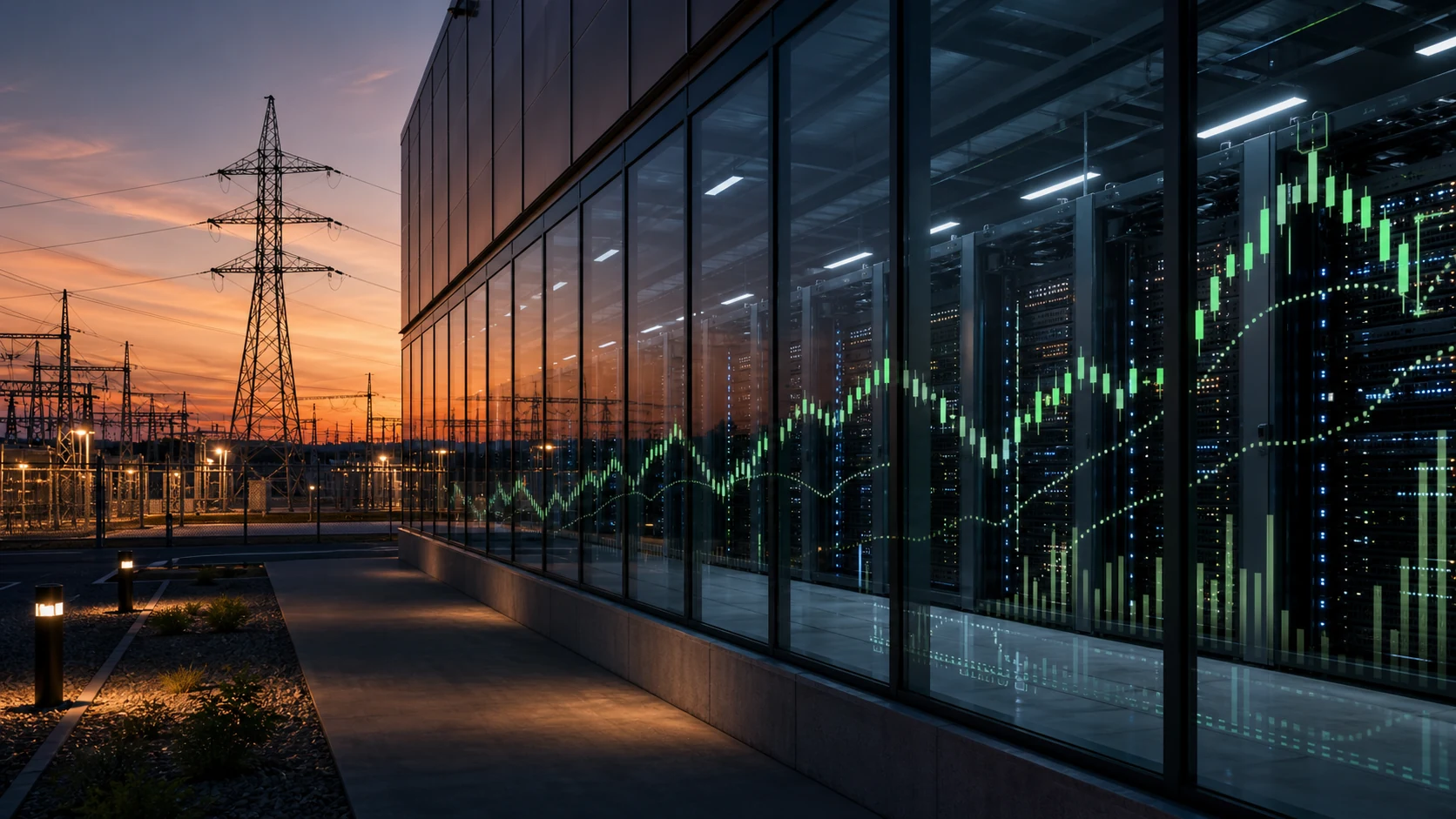
By Marcus Ellery, ReadBasket
The cleanest answer is also the least theatrical: the AI trade still has bubble-like features, but it is no longer only a bubble story. By May 7, 2026, the rally has moved beyond slide decks, demos and abstract promises. Revenue is now showing up in the places where one would expect a real infrastructure cycle to appear: cloud platforms, accelerators, custom chips, networking, foundries, data-center construction and electric-power demand.
That does not settle the valuation question. It sharpens it. The market is no longer asking simply whether AI is useful. It is asking whether the dollars being spent on AI infrastructure can turn into enough durable cash flow to justify the prices investors have already placed on the winners.
Reuters framed the late-April earnings week as a pivotal test for an AI-led U.S. stock market that had been pushed to record levels by a narrow group of technology and semiconductor names. The same report noted that a basket of AI-themed stocks tracked by Bespoke Investment Group had gained 27.2% from March 30 through April 28, while the Philadelphia Semiconductor Index was up roughly 40% for the year at that point. That is the behavior of a market with enthusiasm in it. The question is whether it is only enthusiasm.
The Revenue Is Now Visible
The strongest argument against the simplest bubble thesis is Nvidia. On February 25, 2026, Nvidia reported fiscal 2026 revenue of USD 215.9 billion, up 65% from the prior year. Its data-center business, the core of the AI infrastructure buildout, produced a record USD 62.3 billion in fourth-quarter revenue, up 75% year over year, and USD 193.7 billion for the full year.
That is not a pre-revenue speculative company. It is a very large company selling very expensive equipment to very large customers who are building very real data centers. The risk is not that no money is changing hands. The risk is that too much future growth may already be reflected in market prices.
The same pattern is visible beyond Nvidia. AMD reported first-quarter 2026 revenue of USD 10.3 billion on May 5, up 38% year over year. Its data-center segment rose 57% to USD 5.8 billion, driven by EPYC processors and the ramp of Instinct GPU shipments. Broadcom reported first-quarter fiscal 2026 AI revenue of USD 8.4 billion on March 4, up 106% year over year, helped by demand for custom AI accelerators and AI networking. It guided AI semiconductor revenue to USD 10.7 billion for the second quarter.
TSMC, the foundry behind much of the leading-edge chip supply chain, showed the same infrastructure cycle from another angle. On April 16, TSMC reported first-quarter 2026 revenue of USD 35.9 billion, up 40.6% year over year in U.S. dollar terms. High-performance computing accounted for 61% of net revenue, while advanced technologies at 7 nanometers and below made up 74% of wafer revenue. In other words, the AI buildout is visible not only at the branded chip designer, but also at the fabrication layer.
The Cloud Layer Matters More Than The Hype Layer
The most important test is not whether chip vendors can sell into a capacity shortage. They can. The deeper test is whether cloud providers can convert those chips into services customers use and pay for.
Here, the evidence is increasingly supportive, though uneven. Microsoft reported fiscal third-quarter 2026 revenue of USD 82.9 billion on April 29, up 18% year over year. Microsoft Cloud revenue rose 29% to USD 54.5 billion, Azure and other cloud services revenue increased 40%, and the company said its AI business had surpassed a USD 37 billion annual revenue run rate, up 123% year over year.
Alphabet’s first-quarter 2026 results were similarly important. Total revenue rose 22% to USD 109.9 billion. Google Cloud revenue increased 63% to USD 20.0 billion, and operating income in Google Cloud rose to USD 6.6 billion from USD 2.2 billion a year earlier. Alphabet also said Google Cloud backlog had nearly doubled quarter over quarter to more than USD 460 billion. That backlog number is central to the non-bubble case: it suggests customers are not merely experimenting at the edge, but committing to future cloud consumption.
Amazon reported first-quarter net sales of USD 181.5 billion, up 17%. AWS sales rose 28% to USD 37.6 billion, and AWS operating income increased to USD 14.2 billion. But Amazon also disclosed that trailing twelve-month free cash flow fell to USD 1.2 billion, largely because property and equipment spending increased by USD 59.3 billion, primarily reflecting AI investments. This is the AI cycle in miniature: strong demand and heavy spending at the same time.
Meta adds a different kind of evidence. Its first-quarter 2026 revenue rose 33% to USD 56.3 billion, ad impressions rose 19%, and average price per ad rose 12%. It also lifted full-year capital expenditure guidance to USD 125 billion to USD 145 billion, citing higher component pricing and additional data-center costs. Meta is not a cloud provider in the same way Amazon, Microsoft or Alphabet is. Its AI return has to show up in better advertising, recommendation systems, engagement and eventually new consumer products. That makes its evidence more indirect, but not irrelevant.
What Would Prove This Was A Bubble?
A bubble is not simply prices went up a lot. In practical terms, the bubble thesis strengthens if three things happen together.
- Revenue fails to follow capacity. If hyperscalers keep building data centers but cloud AI revenue, subscription revenue and enterprise usage flatten, the market will have paid for demand that did not arrive.
- Margins compress faster than revenue grows. AI can be popular and still be economically disappointing if inference costs, depreciation, energy, memory and networking expenses absorb the gains.
- The supply chain overbuilds. If Nvidia, AMD, Broadcom, TSMC and memory suppliers expand for demand that later cools, the industry could shift from shortage to excess capacity quickly.
Put simply: a bubble thesis becomes stronger if the money keeps going out but the cash coming back does not scale.
The anti-bubble evidence is also straightforward. It strengthens if cloud revenue keeps accelerating, AI workloads move from training to profitable inference, enterprise adoption becomes routine rather than experimental, and the biggest spenders maintain or improve operating margins despite rising depreciation. It also helps if chip demand broadens from one dominant vendor to a larger ecosystem of accelerators, networking, foundries, power equipment and software services.
Data Centers Turn The Market Story Into A Household Story
The AI rally is often discussed as if it lives only inside stock charts. It does not. It lives in land, steel, transformers, electricity, water, skilled trades and local politics.
Our World in Data, using U.S. Census Bureau and BLS data, shows U.S. data-center construction spending rising sharply after the release of ChatGPT in late 2022, reaching about USD 2.5 billion per month by 2026 in constant 2021 dollars. That is a physical investment cycle, not just a financial one.
The International Energy Agency expects global data-center electricity consumption to roughly double to about 945 terawatt-hours by 2030 in its base case. It also projects U.S. data-center electricity consumption per person to rise from around 540 kilowatt-hours in 2024 to more than 1,200 kilowatt-hours by the end of the decade, roughly equal to 10% of annual electricity use by an American household.
That matters for households because electricity demand is local before it is global. The U.S. Energy Information Administration warned in April 2026 that faster-than-expected data-center demand could lift wholesale electricity prices, with the biggest modeled effect in ERCOT, Texas. In the EIA’s high-demand scenario, the 2027 ERCOT wholesale price was USD 37 per megawatt-hour higher than its baseline forecast. Outside ERCOT, the average increase across major hubs was much smaller, but still directionally upward.
The household effect is therefore not simply AI raises everyone’s power bill. It is more specific: AI data centers can strain regions where grid capacity, generation, transmission and permitting are already tight. That can show up as higher wholesale prices, delayed interconnections, local resistance, construction bottlenecks and pressure on utilities to invest faster.
The Market Is Pricing A Long Payback Period
The AI rally looks less like the dot-com bubble at the level of corporate quality. Many of the central companies are profitable, cash-generative and dominant. Nvidia, Microsoft, Alphabet, Amazon, Meta, Broadcom and TSMC are not fragile startups relying on a permanently open funding window.
But the rally can still contain bubble behavior at the level of expectations. If investors assume that every dollar of AI capex will earn attractive returns, that every enterprise will adopt quickly, that power constraints will be solved smoothly and that margins will remain exceptional, then the market is leaving little room for disappointment.
The better framing is that AI has crossed from story to revenue, but not yet from revenue to fully proven return on capital. The first transition has happened. The second is underway and still contested.
That distinction is the heart of the 2026 AI debate. It is no longer credible to say that the AI boom is built on nothing. The revenue is real. The customers are real. The data centers are real. The electricity demand is real. The supply-chain profits are real.
What remains uncertain is whether the scale of investment will produce returns large enough, durable enough and widely distributed enough to validate the prices attached to the AI winners. A bubble can contain real technology. A boom can contain overvaluation. AI may be both: a genuine technological investment cycle with pockets of speculative excess around it.
As of May 7, 2026, the most measured conclusion is this: AI is no longer merely a promise, but the market may still be pricing parts of it as if the promise has already been completely fulfilled.
Read next: CIO AI Squeeze: The Chip Race Is Hitting Cloud Bills
Sources
- Reuters via Investing.com: Hyperscaler results test AI-driven stock market
- Nvidia: Fiscal 2026 results
- AMD: First-quarter 2026 results
- Broadcom: First-quarter fiscal 2026 results
- TSMC: First-quarter 2026 management report
- Microsoft: Fiscal third-quarter 2026 results
- Alphabet: First-quarter 2026 results
- Amazon: First-quarter 2026 results
- Meta: First-quarter 2026 results
- International Energy Agency: Energy demand from AI
- U.S. Energy Information Administration: Data-center demand and power prices
- Our World in Data: U.S. data-center construction spending