 Jeff McGilligan
By Jeff McGilligan, ReadBasket
Anthropic’s new compute deal with SpaceX is the kind of AI story that looks abstract until you hit a usage limit in the middle of a coding session. On May 6, 2026, Anthropic said it had signed an agreement with SpaceX to use all of the compute capacity at Colossus 1. The company also said the extra capacity lets it immediately double Claude Code’s five-hour rate limits for Pro, Max, Team, and seat-based Enterprise plans, remove peak-hours reductions for Pro and Max users, and raise API rate limits for Claude Opus models.
That is the headline. The bigger story is more revealing: AI compute scarcity has become a product feature. Or, more accurately, the lack of compute has become a product constraint that users can feel directly. The frontier AI race is no longer only about who has the best model, the cleanest app, or the strongest enterprise sales team. It is about who can get enough power, GPUs, networking, cooling, and data center capacity to keep the product usable when demand spikes.
Anthropic’s own announcement is unusually direct. The company said the SpaceX agreement gives it access to more than 300 megawatts of new capacity and more than 220,000 Nvidia GPUs within the month. Axios reported that Anthropic product chief Ami Vora described the deal as using all the capacity of SpaceX’s Colossus One data center. TechCrunch framed the larger strategic question around whether xAI is starting to look like a neocloud: not only a model company, but a seller of scarce AI infrastructure.
Rate Limits Became The Tell
The most interesting part is not that Anthropic bought or rented a large block of compute. Everyone at the top of AI is doing that. The interesting part is how quickly the infrastructure news turned into a developer-tool change. Claude Code users have been living inside five-hour windows, shared plan allowances, and usage warnings. Anthropic’s Claude Help Center notes that Claude and Claude Code usage draw from the same Pro or Max allocation, and that developers can switch to extra usage or API credits when they hit limits. That is a very different experience from the old software world, where a paid developer tool usually felt locally abundant unless the vendor’s servers were down.
With AI coding agents, every ambitious task spends tokens, context, tool calls, and inference capacity. A single large repository, long planning thread, or automated refactor can burn through a session faster than casual chat users expect. This is why rate limits have become a live competitive issue. Developers do not judge these tools only by benchmark scores. They judge them by whether the assistant is still available when the build breaks, the migration is half-finished, or the test suite has exposed a second-order problem.
Anthropic’s move says the company understands that Claude Code cannot be treated as a side surface. It is becoming one of the highest-pressure expressions of Claude demand because coding agents are persistent, token-hungry, and easy to incorporate into daily work. When Claude Code slows down or runs out, developers notice immediately. When limits double, that is not just a perk. It changes how confidently a team can hand real work to the assistant.
The Compute Shortage Is Not One Shortage
It is tempting to describe the AI infrastructure problem as a GPU shortage. That is partly true, but too simple. The shortage is also about power contracts, substation timelines, permitting, cooling systems, data center shells, high-bandwidth networking, chip packaging, and operational experience. A GPU in a slide deck is not the same as a usable GPU in a reliable cluster. Anthropic’s April 2026 Amazon announcement said the company had secured up to 5 gigawatts of capacity for training and deploying Claude, including nearly 1 gigawatt of new capacity by the end of 2026. Its Google and Broadcom announcement described another 5 gigawatts beginning in 2027.
So why does Anthropic still need SpaceX? Because demand is moving faster than long-cycle infrastructure. The Amazon and Google deals matter, but some of that capacity arrives over months or years. The SpaceX arrangement appears valuable because it brings a large block of near-term capacity online quickly. That is the difference between a strategic infrastructure plan and a user-visible relief valve.
This also explains why Anthropic is spreading workloads across AWS Trainium, Google TPUs, and Nvidia GPUs. No single supplier, cloud, or chip family can absorb the shape of demand at the frontier. The new normal for top AI labs is a diversified compute portfolio: cloud partnerships, custom chips, Nvidia clusters, regional inference buildouts, and occasionally surprising deals with companies that are also competitors or adjacent competitors.
Colossus Turns Into A Business
For Musk’s AI infrastructure ambitions, the deal may be even more strategically interesting. Colossus has been framed as a symbol of an attempt to catch AI leaders through sheer infrastructure velocity. But leasing the full Colossus 1 capacity to Anthropic turns that symbol into a revenue-producing asset. TechCrunch’s neocloud question matters because it changes how we read the AI market: the scarce product may not always be the chatbot. Sometimes it is the cluster.
If a company builds massive GPU capacity primarily to train and serve its own model, compute is a strategic internal advantage. If it leases large blocks of that compute to other model developers, it begins to look more like an infrastructure provider. That can be lucrative, especially when GPUs are scarce. It also means the company is choosing cash flow and utilization over keeping all capacity for its own models.
There is a practical logic here. AI data centers are too expensive to leave underused. But the optics are still striking: one of the most prominent AI challengers is supplying capacity to one of the frontier labs it is supposed to compete with. In an ordinary software market, that would look strange. In the AI infrastructure market, it may become normal.
Orbital Compute Is The Moonshot, Not The Point
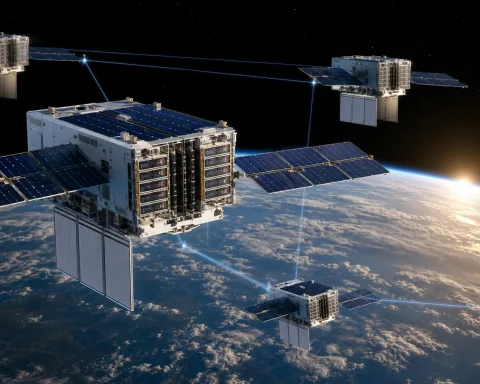
Anthropic also said it had expressed interest in partnering with SpaceX to develop multiple gigawatts of orbital AI compute capacity. That phrase is designed to travel. It ties SpaceX’s launch economics to the AI industry’s power and cooling constraints, and it hints at a future where compute infrastructure is no longer only a land-and-grid problem.
It is worth separating the speculative from the immediate. Orbital data centers may become an engineering program, but they are not why Claude Code limits changed this week. The real-world impact came from a terrestrial data center with hundreds of megawatts and a very large number of Nvidia GPUs. The orbital language tells us where SpaceX wants the narrative to go. The rate-limit change tells us where the bottleneck is today.
What Developers Should Take From This
For developers, the lesson is not simply “Claude Code has higher limits now.” The lesson is that AI coding tools are becoming infrastructure-sensitive in a way normal SaaS tools rarely were. Model quality, context size, tool reliability, and editor integration matter. But so does the vendor’s ability to secure enough inference capacity to serve heavy users during business hours.
This will shape buying decisions. Enterprises evaluating coding agents should ask about rate-limit policies, regional capacity, priority tiers, data residency, and fallback behavior. Individual developers should expect plan details to keep changing as vendors tune economics around actual usage. The price of AI coding assistance is not just a subscription number. It is a bundle of compute rights, policy decisions, and capacity bets.
Anthropic’s SpaceX deal is therefore a useful marker. The AI race has entered the phase where infrastructure announcements immediately affect what developers can do in their terminals. The frontier model business is becoming a power business, a chip business, a data center business, and a rate-limit business all at once. Claude Code users felt the shortage first as friction. Now they are seeing the fix arrive as 300 megawatts of borrowed scale.
Read next: AI Agents Are Deleting Production Data. The Problem Is Permissions.