 Jeff McGilligan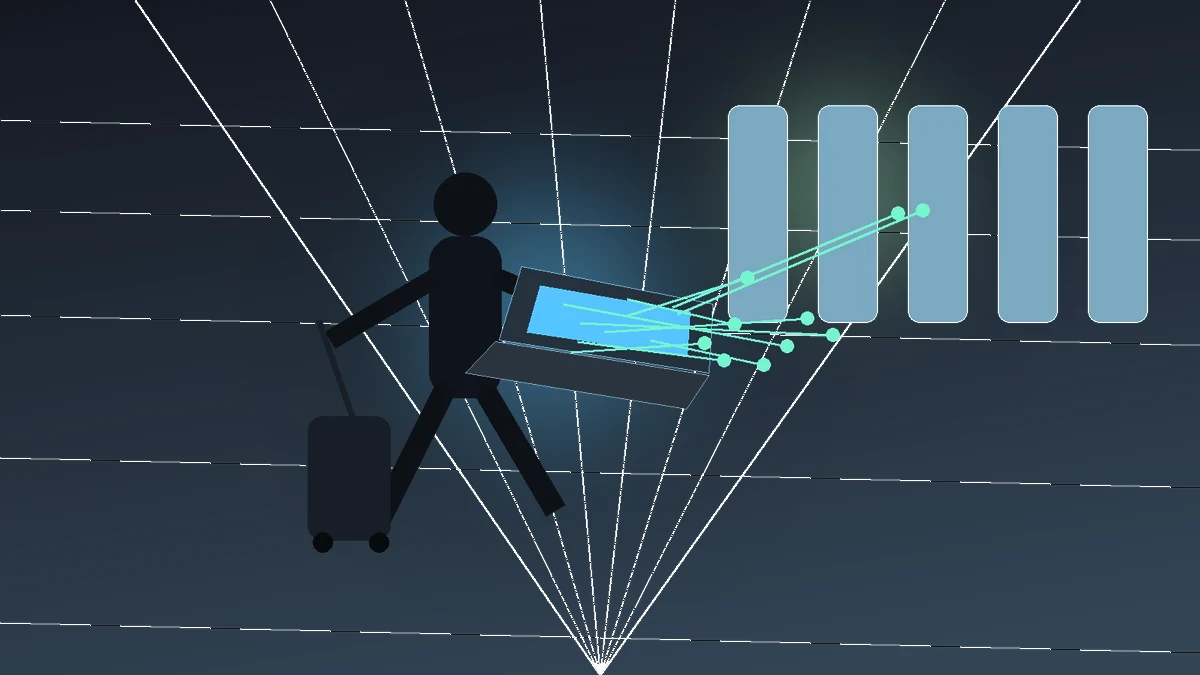
By Jeff McGilligan, ReadBasket
Current as of May 20, 2026.
The strangest symbol of the AI work era may not be a chatbot window or a data center. It may be a person walking through an airport with a laptop half-open, trying to keep an AI coding agent alive.
The habit has been showing up in developer circles with a few names: open-laptop walking, carrying laptops ajar, keeping the machine cracked, and, more playfully, the “clam walk.” The idea is simple. Someone starts a long-running AI coding task, then needs to move. If the laptop lid closes, the machine may sleep, the terminal session may pause, the Wi-Fi may drop, or the coding agent may lose the thread. So the user walks away with the laptop still slightly open, as if the future of software depends on not quite shutting the lid.
It looks ridiculous because it is ridiculous. It also says something important. AI agents have moved from demo theater into daily work faster than the surrounding habits, hardware settings and security models could adapt. The software wants to keep working in the background. The laptop still thinks closing the lid means the workday is over.
Why People Are Doing It
Modern coding agents can run tests, edit files, inspect logs, propose patches and wait for approval. Tools like OpenAI Codex and Anthropic’s Claude Code are designed for longer, more autonomous workflows than ordinary autocomplete. That changes the rhythm of programming. A developer can start a task, step away, and return to a result, a failed test, a question or a patch that needs review.
The problem is that many of these workflows still depend on a local machine staying awake. If the laptop sleeps, the network drops or the terminal process ends, the agent may stop mid-task. That is not a philosophical AI limitation. It is a plumbing problem. But plumbing problems shape behavior.
Business Insider reported on people carrying half-open laptops in offices, airports, schools and even exercise spaces so their AI coding work would not pause. OpenAI’s own recent Codex mobile announcement points in the same direction from the product side: users want to supervise agents from anywhere, but remote access still depends on the host machine being awake, online and running the tool.
The New Body Language Of Work
Every major shift in computing creates its own awkward gestures. The early smartphone era gave us people walking slowly while staring at tiny screens. The Zoom era gave us bedroom offices, mute panic and carefully arranged bookshelves. The agent era may give us laptop owners moving through the world like they are carrying a tray of soup.
The open laptop is not really about convenience. It is about continuity. Work used to be located in a document, an inbox or a meeting. Increasingly, it is located in a process that is still running. The human is not always doing the work directly, but the human is still responsible for keeping the work alive, checking the result and approving the next move.
That creates a strange middle state. The AI agent is autonomous enough to continue without constant typing, but not autonomous enough to be fully trusted or fully detached from the user’s device. The laptop becomes a leash.
There Are Better Fixes Than Clam Walking
The obvious fixes are not glamorous. On macOS, users can use tools such as the built-in caffeinate command or apps that prevent sleep. Windows users can adjust power settings. Developers can use remote machines, cloud development environments, SSH sessions, terminal multiplexers, persistent runners or agent platforms that do not depend on a laptop lid angle.
Those fixes are already becoming part of the agentic-work stack. The direction is clear: serious AI coding workflows will move toward cloud-hosted sessions, mobile supervision, better permission checkpoints and resumable tasks. Nobody wants the future of software delivery to depend on whether a MacBook hinge is open by five degrees.
But the awkward transition matters because it reveals where agentic work is still immature. If an AI assistant needs the user’s machine awake, unlocked, networked and quietly burning battery in a bag, the workflow is clever but not yet settled.
The Security Risk Hiding In The Joke
The funny image should not distract from the risk. A laptop running an agent may also have access to source code, local files, API keys, internal tools, issue trackers and production-adjacent systems. An open screen in a public place is a privacy problem. An agent with excessive permissions is a security problem. A user who cannot explain exactly what the agent can do is a governance problem.
Security researchers have already warned about agentic AI risks such as tool misuse, prompt injection, excessive authority and weak oversight. The more autonomous the workflow becomes, the more important it is to limit what the agent can touch. A good AI coding setup should have scoped permissions, clear logs, review gates, branch isolation, test requirements and a way to stop or roll back the task.
The future of AI work is not just “let the agent run.” It is “let the agent run inside boundaries that make sense.”
What The Clam Walk Really Means
The clam walk is funny because it is physical. It turns an abstract change in software into something you can see in a hallway. A person is no longer simply carrying a laptop. They are carrying a running workflow, a half-finished task, a model conversation and a small fear that everything will stop if the screen goes dark.
That is the real story. AI agents are not just changing what computers can do. They are changing the choreography of work around computers. People are learning when to intervene, when to trust, when to supervise and when to let a machine continue without them.
The Bottom Line
The half-open laptop trend will probably fade as tools improve. Cloud agents, mobile review, persistent sessions and better sleep handling will make the behavior unnecessary. But the reason it appeared will not disappear.
AI work is becoming continuous. The old ritual was simple: close the laptop, stop working. The new ritual is messier: the human walks away, but the task may still be alive. For a brief and awkward moment, you can see that transition in the shape of a laptop that refuses to shut.
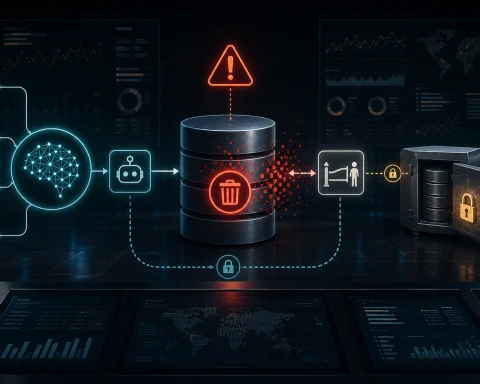
Read next: AI Agents Are Deleting Production Data. The Problem Is Permissions.