 Clara Bennett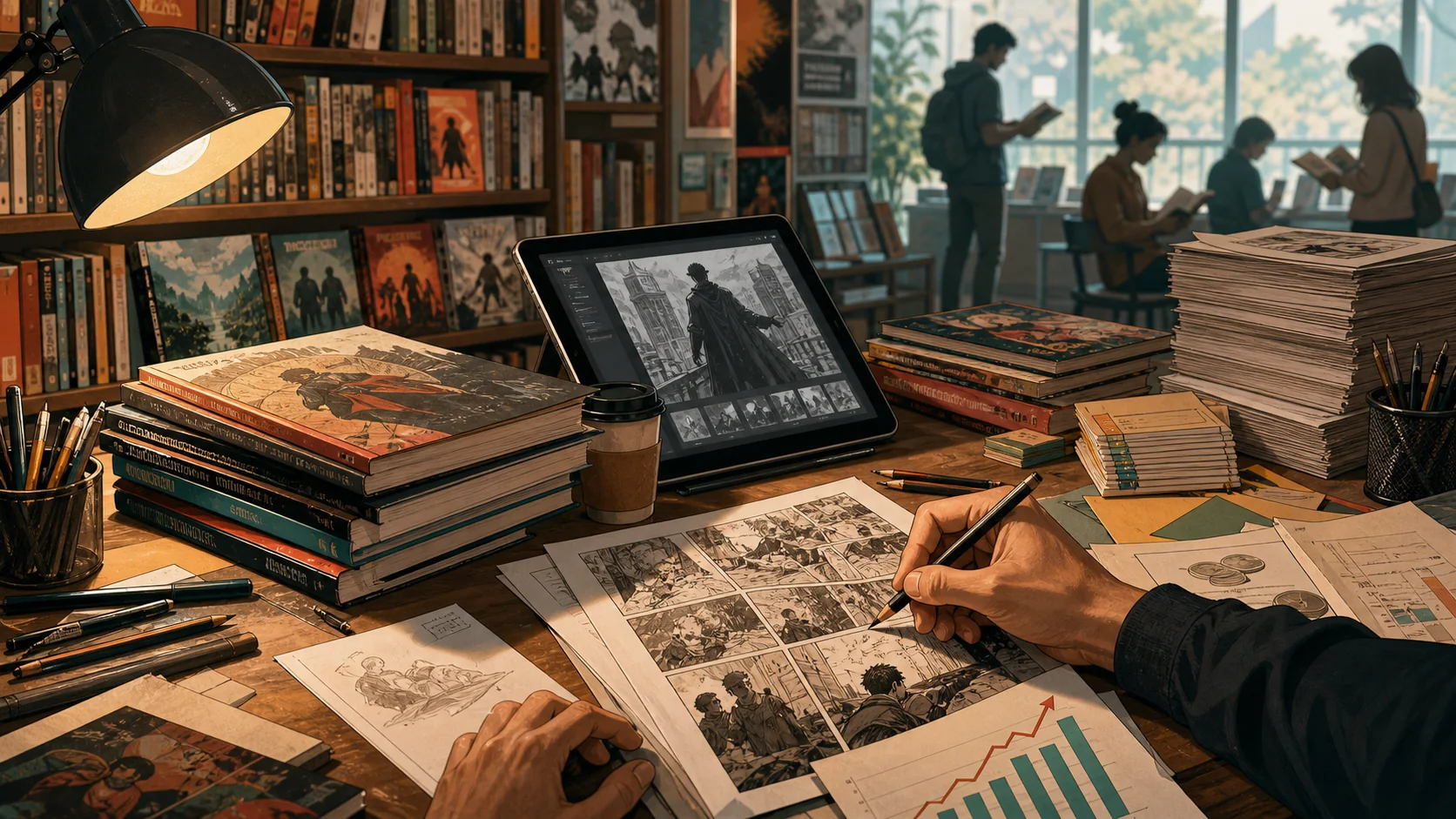
By Clara Bennett, ReadBasket
Graphic novels are having one of those rare cultural moments where almost everyone can find a reason to celebrate them. Kids love them. Teachers use them to pull reluctant readers back toward books. Librarians know they circulate. Bookshops have learned that manga, memoir comics, middle-grade series, superhero collections, fantasy adaptations, webcomic collections, and literary graphic novels all bring different readers through the door. Parents who once worried that comics did not “count” as reading are increasingly being told the opposite: if a child is reading, following panels, building vocabulary, and asking for the next volume, it counts.
But the boom has a problem hiding inside it. The people making graphic novels and comics are often not sharing proportionately in the success. The new UK Comics Creators Research Report 2026, based on nearly 700 creator responses, found that 89 percent of creators earning from traditional publishing make less than the UK National Living Wage from comics work. The report also found that only one in five respondents who want comics to be their career earn most of their income from comics, while 72 percent rely on employment outside the medium.
That should unsettle readers, not because every book purchase needs to become a moral performance, but because graphic novels are doing real cultural work. They are not a side dish to literature. They are one of the liveliest reading formats in the market. If the industry wants comics to help rebuild reading habits, it has to take the people making them seriously.
The Market Is Not The Same As A Living
The sales story looks strong. ICv2 reported in February 2026 that comics and graphic novel sales in the U.S. and Canada reached an estimated $2.2 billion in 2025, a new high. Direct market sales, meaning comic shops, grew quickly, and graphic novels remained more than two and a half times larger than periodical comics by format. Retailers pointed to superhero relaunches, manga, Invincible, the Energon universe, and other hits bringing new customers into stores.
That is the public-facing picture: crowded shelves, thick series spines, big franchise energy, manga sections with serious foot traffic, and graphic novels showing up in school bags. The creator picture is more fragile. The UK report describes an ecosystem where many artists and writers are juggling freelance work, day jobs, benefits, convention costs, uncertain publishing income, and the pressure of generative AI. Only 4 percent of respondents said they use generative AI in comics production, but 36 percent said they believe or know they have lost work or income because of it.
That is the contradiction: the format is winning readers, while many creators cannot rely on it for stable income. A graphic novel can take years of writing, penciling, inking, coloring, lettering, revising, pitching, promoting, and appearing at events. Readers see the finished object. They rarely see the unpaid development time, the low page rates, the rights tradeoffs, the convention table fees, or the way a creator’s most-loved work may still not pay rent.
Why Graphic Novels Matter For Reading
This would be a niche labor story if graphic novels were a niche format. They are not. They matter because they meet readers where they are. The National Literacy Trust’s 2025 report found that reading enjoyment among children and young people in the UK had fallen to its lowest level in 20 years, with just 32.7 percent of 8- to 18-year-olds saying they enjoy reading in their free time. Scholastic’s Kids & Family Reading Report similarly notes that reading enjoyment and frequency decline as children get older, and says children want access to books they actually want to read.
Graphic novels are unusually good at that bridge. They carry narrative through image and text at once. They reward visual literacy. They make rereading feel natural. They can make a long book feel less intimidating without making the story simple. For some readers, especially children who feel defeated by dense pages, the panel is not a shortcut. It is an invitation.
That is why the old question, “Are graphic novels real reading?” now sounds tired. Of course they are. The better question is whether the publishing economy around them respects the amount of craft involved. A strong graphic novel is not prose with pictures sprinkled over it. It is pacing, composition, silence, panel rhythm, visual characterization, page turns, lettering, color, and design working together. When it is done well, it looks effortless in the dangerous way all difficult art looks effortless.
What Readers Can Actually Do
No reader can fix creator pay alone, and it would be exhausting to turn every purchase into a research project. But readers do have power, especially in a format where discovery is often personal. Follow creators by name, not only characters or franchises. If you love a graphic novel, learn who wrote, drew, colored, lettered, translated, and edited it. Ask libraries to buy creator-owned work. Preorder books when possible, because preorders help publishers and retailers measure demand. Buy from local comic shops and independent bookshops when you can. Share the creator’s own posts, newsletter, store, Patreon, Ko-fi, or convention schedule if they have one.
Libraries are not the enemy of sales here. For many readers, the library is the first place they discover a series, and discovery can lead to future purchases, events, fandom, and a lifelong habit. The same is true for schools. A classroom shelf with graphic novels is not lowering standards. It is putting more doors into reading.
Parents can help by dropping the apologetic language. A child reading comics is not taking a break from reading. They are reading. Ask them about the art style, the page they loved, the character design, the joke they caught, the cliffhanger, the next volume. That kind of attention teaches children that visual storytelling deserves the same respect as prose.
The Boom Needs A Better Bargain
The industry side is harder, because it means money, contracts, rights, funding, and risk. The UK report recommends comics-specific training, emergency grants, clearer business guidance, public funding, subsidized convention costs, and better recognition of comics as a cultural art form. Those are not glamorous interventions, but they are the kinds of supports that keep talented people from leaving because the numbers never work.
Publishers also have to look carefully at the gap between graphic novels as a growth category and graphic novel creators as precarious workers. If the format is valuable because it creates new readers, then the people making those books are not replaceable content suppliers. They are the reason the category works.
The graphic novel boom is real. So is the creator-pay problem. Both facts can sit on the same page. The best response is not guilt, but respect: respect for the format, respect for the craft, respect for the workers, and respect for the readers who already knew these books mattered before the market caught up.
Read next: The Prequel Industrial Complex: Fantasy’s Future Is Hidden in the Footnotes
Sources
- UK Comics Creators Research Report 2026
- The Bookseller: Comics creators struggle to survive despite record industry sales
- ICv2: Comics and graphic novel sales reached new high in 2025
- Cartoonist Cooperative: The 2024 Comics Worker Survey
- National Literacy Trust: Children and young people’s reading in 2025
- Scholastic: Kids & Family Reading Report key findings