 Marcus Ellery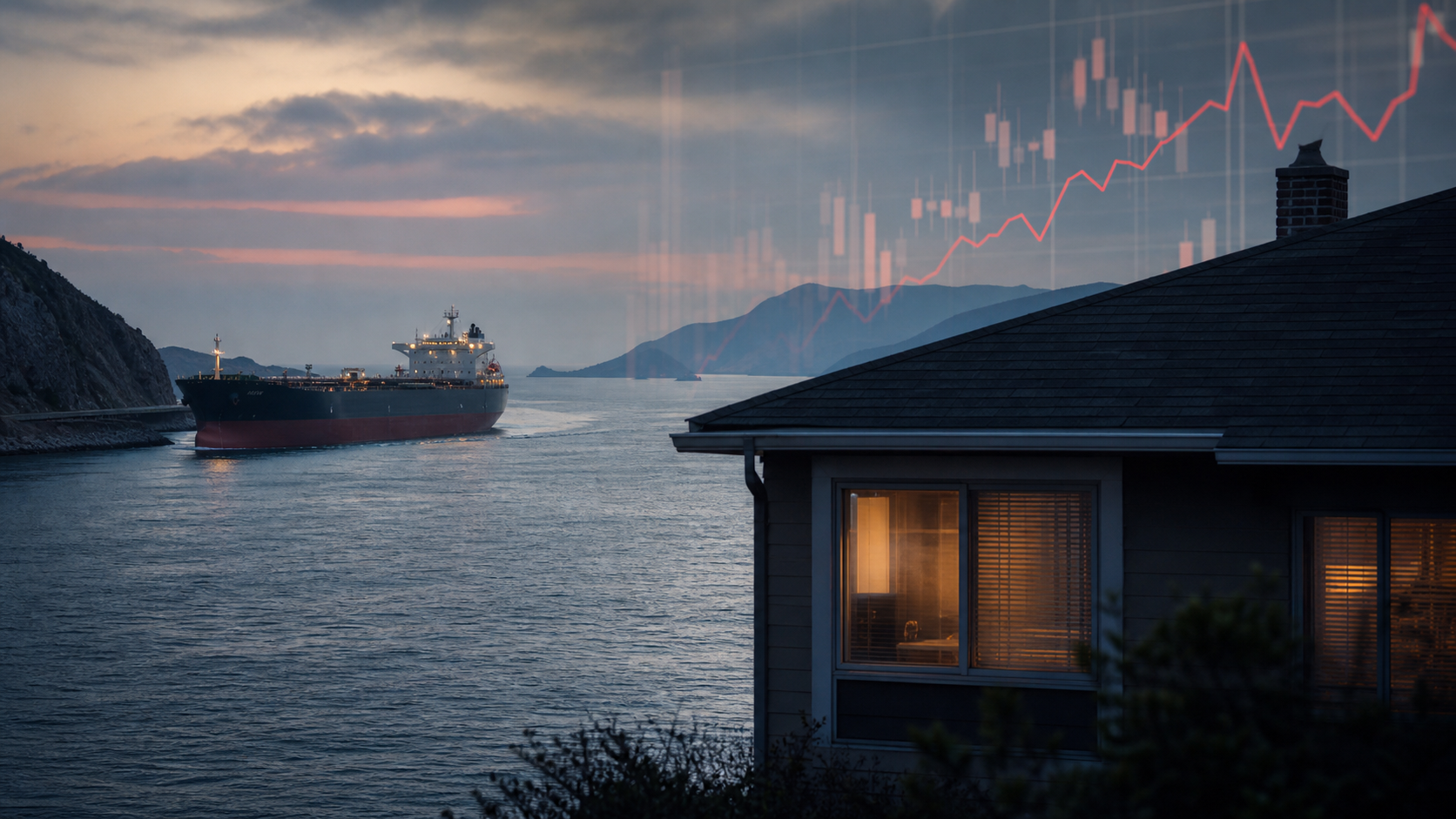
By Marcus Ellery | Research current to May 6, 2026
The first price shock was easy to see. Oil moved. Gasoline moved. Shipping risk moved. The second shock is quieter, but households may feel it for longer: the oil shock is moving from tankers into mortgages, grocery bills, fertilizer costs, central bank language, and the monthly math of buying a home.
The Strait of Hormuz is the reason this story travels so quickly. The International Energy Agency calls it one of the world’s most critical oil transit chokepoints, with roughly 20 million barrels per day of crude oil and oil products shipped through it in 2025. The U.S. Energy Information Administration has made the same basic point for years: there are few clean alternatives if traffic through Hormuz is constrained. When markets worry about that passage, the price of energy becomes a global signal, not a regional headline.
Read next: How the Iran War Is Disrupting Travel and Fuel Prices
Why oil becomes a mortgage story
Mortgage rates do not follow oil prices in a straight line. They move with Treasury yields, inflation expectations, lender margins, credit risk, and the Federal Reserve’s policy outlook. But energy can push on all of those at once. Higher crude oil feeds into gasoline and diesel. Diesel moves freight. Freight touches groceries, building materials, appliances, farm inputs, and the cost of getting almost anything to a shelf. If investors believe those costs will keep inflation elevated, bond yields can stay higher. If bond yields stay higher, mortgage rates struggle to fall.
That is the bridge from tanker to kitchen table. The household sees gasoline first, then food and delivery costs, then a mortgage quote that does not improve even when the housing market feels slow. The buyer may not follow Brent crude or the Strait of Hormuz, but the lender does. So does the bond market. So does the Fed.
The Fed is already talking about energy
The Federal Reserve’s April 29, 2026 statement said inflation remained elevated, partly because of the recent increase in global energy prices, and it kept the federal funds target range at 3.5% to 3.75%. Chair Jerome Powell’s press conference transcript pointed to the Middle East conflict as a source of uncertainty and said higher energy prices would push up overall inflation in the near term. That is central-bank language for a simple problem: rate cuts become harder to deliver when oil is making inflation look sticky again.
For borrowers, the exact Fed move matters less than the direction of expectations. Mortgage markets often react before policy changes arrive. Bankrate’s daily mortgage survey showed the average 30-year fixed mortgage rate at 6.44% on May 6, 2026. That is not a crisis rate by historical standards, but it is high enough to change buying power. A small move in the mortgage rate can change a monthly payment more than a buyer expects, especially at current home prices.
Fuel, food, fertilizer, and the long tail
Energy shocks rarely stay in one category. The Bureau of Labor Statistics reported that March CPI rose 0.9% month over month, with gasoline up sharply and accounting for a large share of the increase. The World Bank’s April 2026 Commodity Markets Outlook warned that the Middle East war was sending a severe shock through commodity markets, with energy and fertilizer prices doing much of the damage. Fertilizer matters because it sits upstream of food. If farmers pay more to plant, feed, irrigate, refrigerate, and transport, the consumer eventually sees part of that cost.
This is why the oil shock can outlive the oil headline. A ceasefire, reopening, or diplomatic breakthrough can pull crude prices lower quickly. But contracts, inventories, shipping insurance, refinery margins, fertilizer supply, and consumer expectations do not always reset overnight. Inflation is not only a spot price. It is a chain of price-setting decisions made by businesses that are trying not to be caught short again.
What households should watch
For households, the useful watchlist is short. Watch gasoline, diesel, and jet fuel because they show how energy is moving into transport costs. Watch the 10-year Treasury yield because mortgage pricing tends to lean on it. Watch weekly mortgage averages, but also get real quotes from lenders, because advertised averages can hide meaningful differences. Watch food-at-home categories where transport and fertilizer matter. And watch central bank statements for any sign that policymakers are treating the energy shock as temporary or as a risk to longer-term inflation expectations.
Homebuyers should also stop shopping only by home price. In a volatile rate environment, the monthly payment is the real search filter. A house that looked affordable at one rate can become tight after a small move in rates, insurance, taxes, or utility costs. Sellers may eventually adjust, but the adjustment is uneven. Some markets cut prices. Others offer concessions. Others simply freeze because owners with low old mortgages do not want to move.
What would change the story
The optimistic path is clear: de-escalation in the Gulf, steadier traffic through Hormuz, lower crude prices, calmer shipping insurance, softer inflation expectations, and a bond market that becomes more comfortable with future rate cuts. That would not instantly make homes cheap, but it could take some pressure off mortgage rates and household budgets.
The pessimistic path is also clear: a prolonged disruption, repeated attacks on energy infrastructure, higher diesel and fertilizer costs, and central banks forced to keep policy tighter because inflation expectations drift upward. In that case, the economic pain is not limited to drivers. It spreads to renters, buyers, farmers, airlines, retailers, and governments that have to refinance debt at higher rates.
Bottom line
The Strait of Hormuz may look far from a mortgage application, but the financial system is good at connecting distant risks to local prices. Oil does not need to stay at extreme levels forever to matter. It only needs to stay high long enough for inflation expectations, bond yields, and household budgets to adjust around it. That is why the oil shock has moved from tankers to mortgages. It is no longer just an energy-market story. It is a cost-of-living story with a shipping lane at the center.
Sources
- International Energy Agency: Strait of Hormuz factsheet
- U.S. EIA: Strait of Hormuz remains critical oil chokepoint
- Federal Reserve: April 29, 2026 FOMC statement
- Federal Reserve: April 29, 2026 press conference transcript
- U.S. Bureau of Labor Statistics: March 2026 CPI release
- World Bank: April 2026 Commodity Markets Outlook press release
- Bankrate: current mortgage rates