 Wilhemina Carpenter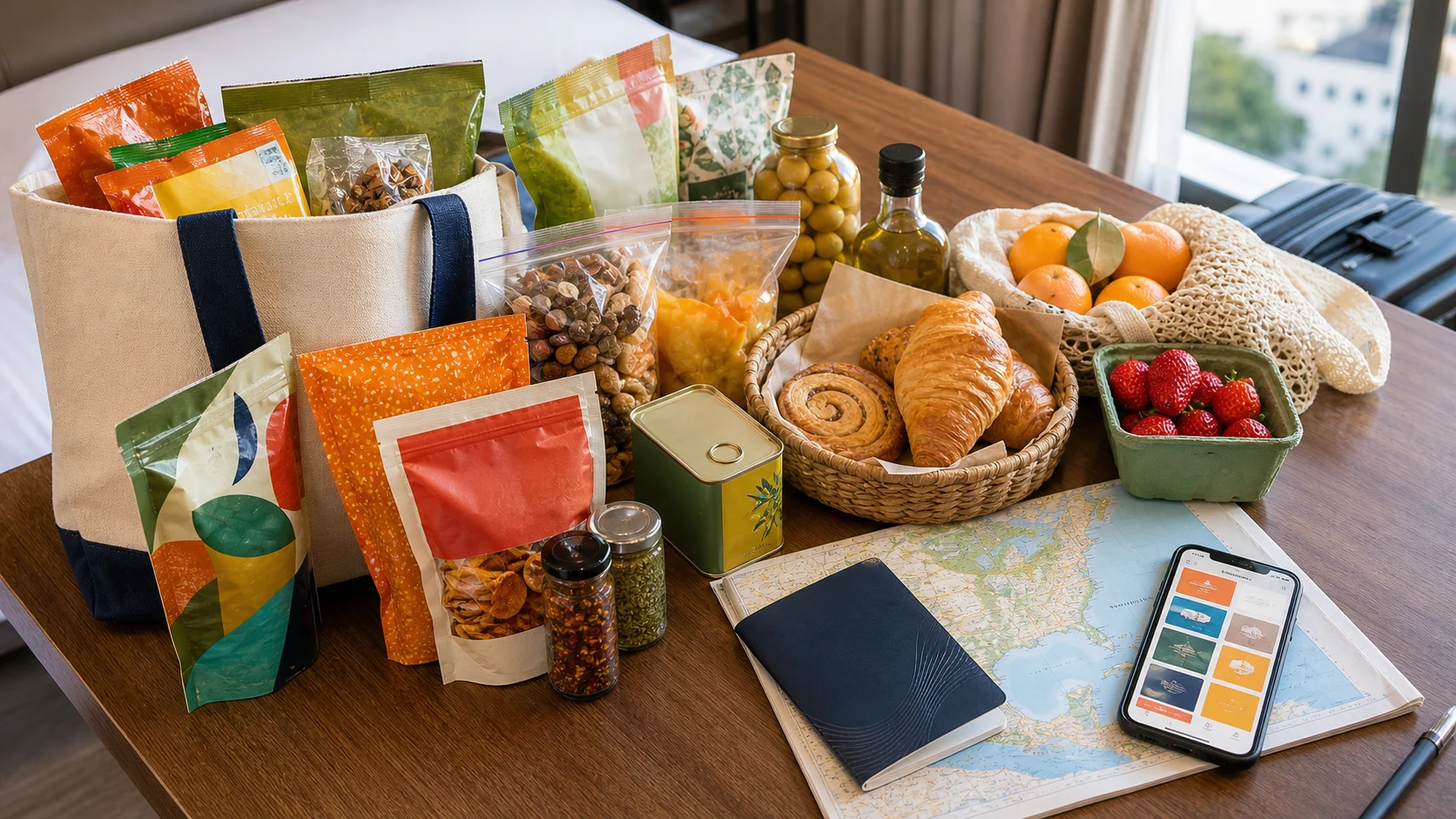
By Wilhemina Carpenter | Research current to May 6, 2026
Foodie travel in 2026 has a new rule: the best bite of the trip might not come with a reservation. It might be a chile-lime chip flavor from a corner store, a hot bakery bun eaten on the sidewalk, a vinegar shrub from a farmers market, a smoky hojicha latte, or a tin of olive oil so pretty it deserves its own shelf at home.
The food-trip mood is clear. Travelers want flavor with a story, not just a table with a view. American Express Travel calls one of its 2026 trends “Snackpacking”, with younger travelers making room in the itinerary for local snacks. Booking.com’s 2026 predictions point to “shelf-ie souvenirs,” with travelers interested in edible pantry goods and design-led kitchen items instead of forgettable trinkets. Meanwhile, Whole Foods Market’s 2026 trend forecast is heavy on fiber, vinegar, tallow, upgraded instant foods, and stylish pantry packaging.
Translation: the 2026 food vacation is not a three-dinner-a-day endurance sport. It is a smarter, snackier, more curious way to eat through a place.
Read next: How to Use AI Travel Assistants Safely in 2026
Start With A Flavor Map, Not A Restaurant List
The rookie mistake is building a trip around ten famous restaurants and then realizing every great bakery, market, coffee bar, and street cart is on the other side of town. Build a flavor map instead.
Choose one neighborhood per half-day and stack it like this:
- Morning: bakery, coffee, tea, breakfast counter, or market stall.
- Midday: grocery store, food hall, lunch special, sandwich shop, noodle counter, or seafood shack.
- Afternoon: pantry shopping, chocolate, cheese, spice shop, wine bar, cooking class, or food tour.
- Evening: one anchor meal, not three competing dinner plans.
This protects the trip from becoming a reservation spreadsheet with indigestion. It also leaves room for the thing locals actually care about: the bakery that sells out by 10 a.m., the supermarket snack aisle, the neighborhood place with six tables, the regional condiment nobody at home has heard of yet.
Pack For Snacks Before You Buy Snacks
Snackpacking sounds cute until a jar of jam detonates in a suitcase. Bring the boring gear. It earns its space.
- One flat reusable tote for grocery runs.
- Two zip-top bags for oily tins, sauces, and spice packets.
- A few rubber bands for opened snack bags.
- A small roll of painter’s tape for sealing lids.
- A collapsible food container for bakery leftovers or market fruit.
- A checked-bag plan if you intend to bring home liquids, oils, vinegars, honey, sauces, or spreads.
For US flyers, the TSA food guidance is the line between smug and sad. Solid foods can usually go in carry-on or checked bags, but liquids and gels over 3.4 ounces belong in checked luggage. That includes many sauces, jams, nut butters, oils, vinegars, soft spreads, and creamy souvenirs.
Know What Customs Will Not Laugh About
Edible souvenirs are the joy of the modern food trip, but US customs rules are not vibes-based. US Customs and Border Protection says agricultural items must be declared and may be inspected. Meat, fresh fruits, vegetables, seeds, plants, soil, and some animal or plant products can be restricted or prohibited depending on origin.
The safest souvenir lane is sealed, shelf-stable, commercially packaged food: spices without seeds, tea, roasted coffee, hard candy, chocolate, crackers, dry pasta, cookies, some condiments, and properly labeled pantry goods. The risky lane is fresh produce, loose seeds, homemade meat products, sausages, broths, fresh cheese, plants, and anything that looks like it could start a farm, feed a pest, or confuse an inspector.
Declare the food. Always. A declared item that cannot enter is usually surrendered; an undeclared prohibited item can become an expensive lesson.
Follow The 2026 Flavor Clues
A good food traveler watches trends without becoming a trend hostage. Use them as clues for what to look for in bakeries, groceries, cocktail bars, markets, and casual restaurants.
- Vinegar: Look for drinking vinegars, shrubs, pickle brines, fruit vinegars, and tart cocktails. Whole Foods flagged vinegar as a major 2026 pantry trend.
- Fiber-forward foods: Beans, oats, cassava, chicory, konjac, lentil snacks, and high-fiber breads are moving from health-food shelves into mainstream travel snacks.
- Sweet heat: Hot honey, chile-maple, pineapple-habanero, spicy candy, and “swicy” snacks are easy supermarket wins.
- Hojicha: National Geographic’s 2026 food trend list points to roasted Japanese hojicha as matcha’s smokier cousin.
- Garum and deep umami: Chefs are reviving fermented flavor bombs, including fish, mushroom, and cheese-based versions.
- Tteokbokki and chewy textures: Korean rice cakes, mochi-like desserts, bouncy noodles, and gelatinous sweets are texture tourism at its best.
- Pickle everything: Pickle chips, pickle cocktails, pickle popcorn, pickle dips. If the aisle looks unhinged, investigate.
Choose Destinations By Eating Style
Do not ask, “Where is the best food?” Ask, “What kind of eating do I want to do for five days?” That answer changes the destination.
For big-city range in the US, Food & Wine’s 2026 Global Tastemakers ranked New York, Chicago, Los Angeles, New Orleans, San Francisco, Houston, Austin, Philadelphia, Charleston, and Miami among top US food-and-drink cities. That list is useful because it is not one flavor of delicious. New Orleans is a long-lunch city. Houston is a global strip-mall treasure hunt. Philadelphia is markets, immigrant kitchens, sandwiches, and serious restaurants. Miami is Latin, Caribbean, seafood, nightlife, and pastry energy.
For international food-first trips, Conde Nast Traveler’s 2026 food destinations include Boston, Crete, Fes, Hong Kong, Medellin, Minas Gerais, Parramatta, Patan, Prince Edward County, and Seville. That is a useful spread: tapas and sherry in Seville, Cretan olive oil and mountain herbs, Hong Kong high-low dining, Brazilian cheese culture in Minas Gerais, and wine-country grazing in Prince Edward County.
Book One Hands-On Food Experience
One class or workshop can make the whole trip taste sharper. American Express also highlights “Sight-Doing”: travelers seeking hands-on local activities rather than passive sightseeing.
For food travelers, that can mean a tortilla class in Mexico, a pasta workshop in Italy, a kimchi session in Seoul, a spice-market tour in Morocco, a cheese visit in Brazil or Canada, a chocolate class in Paris, a sake tasting in Japan, or a bakery crawl in a US city. The trick is to book the experience early in the trip. You will understand menus better afterward, and your grocery shopping will get more dangerous in the best way.
Eat Safely Without Eating Fearfully
Useful food travel is not timid. It is alert. The CDC Yellow Book food and water guidance recommends extra care where hygiene or sanitation is uncertain: hot food should be served hot, cold food should be cold, raw or undercooked meat and seafood carry more risk, and tap water or ice may be unsafe in some destinations.
The practical version: choose busy stalls with fast turnover, watch whether food is cooked fresh, carry hand sanitizer, use bottled or properly treated water where needed, and be careful with buffets, lukewarm trays, unpeeled raw produce, and mystery ice. A stomach bug is not cultural immersion.
Build A Climate-Proof Food Trip
Food trips are vulnerable to weather. Heat waves kill appetite. Storms close markets. Smoke changes outdoor dining. In April 2026, Booking.com reported that nearly three quarters of travelers globally consider extreme weather risk when choosing a destination and timing.
For a food-focused itinerary, that means booking shoulder seasons when possible, checking whether markets are seasonal, choosing refundable food tours during stormy months, and keeping one indoor food plan for each outdoor day. If the dream is night markets, seafood shacks, vineyards, or farm visits, weather is not a footnote. It is part of the reservation strategy.
The 2026 Food Trip Formula
- One anchor meal per day: a restaurant, chef counter, supper club, or classic institution.
- One local shopping stop per day: supermarket, bakery, spice shop, farmers market, deli, or convenience store.
- One small risk per day: unfamiliar fruit, new condiment, street snack, regional soda, breakfast dish, or dessert texture.
- One recovery window per day: a walk, nap, tea, pool hour, or quiet park bench. Digestion deserves scheduling.
- One souvenir rule: if it is sealed, shelf-stable, legal to bring home, and hard to find in the US, it earns luggage space.
The flex is not how many famous places you can hit. The flex is coming home with a suitcase that smells faintly of coffee and spices, a camera roll full of market signs, and a new house condiment that ruins your old standards forever.
Sources
- American Express Travel: 2026 Global Travel Trends
- Booking.com: 2026 travel predictions
- Whole Foods Market: 2026 food and beverage trends
- Food & Wine: top US cities for food and drink in 2026
- Conde Nast Traveler: best places to eat in 2026
- TSA: traveling with food
- US Customs and Border Protection: agricultural items
- CDC Yellow Book: food and water precautions for travelers